
This is a guest post by André Rangel, co-founder and CEO of Tryp.com.
In a recent newsletter, I wrote about the conflict between eDreams and Tryp.com. Shortly after that, I reached out to André to hear his perspective. I wanted to understand the actual product philosophy they are building, beyond just the legal noise.
André argues that the future of travel isn’t about better search bars or “agentic” prompts; it’s about algorithmic discovery and “Feed Data.” Equally disruptive is their approach to customer acquisition. By leaning into a decentralized network of local “Country Managers,” Tryp is bypassing the traditional CAC trap in favor of viral, peer-to-peer narratives.
His thesis on the bias of legacy data and the limitations of LLMs for pricing logic is a compelling read for anyone tracking the next generation of OTAs. Thank you, André, for sharing these insights with the Travel Tech Essentialist community.
We don’t actually know what we want. But we think we know.
For two decades, the foundation of online travel—the “Search Bar”—has relied on the assumption that we do. Travel planning has historically been a risk minimization challenge. We go to the same places because, with limited vacation time and budget, we can’t afford to risk it on the unknown.
But this premise is becoming obsolete. The next generation of travelers—specifically Gen Z and younger Millennials—isn’t looking to minimize risk; they are looking to maximize discovery. They are traveling more than ever, but they aren’t searching anymore. They want machines to handle that for them.
Yesterday, I saw a LinkedIn post from a travel executive that perfectly illustrated the industry’s blind spot. He wrote:
“For 20 years, trips started inside an OTA. Guests opened websites. Scrolled. Compared. Booked. Now they say: ‘Plan me a 3-day trip to Copenhagen’”
The executive is right about the change, but wrong about the behavior.
I don’t want to type, “Plan me a 3-day trip to Copenhagen.” That is still work. That is still a prompt. The reality is that I don’t know if I want Copenhagen. I might want Lisbon, or maybe a hidden gem in Albania, provided the deal is right and the vibe matches my feed.
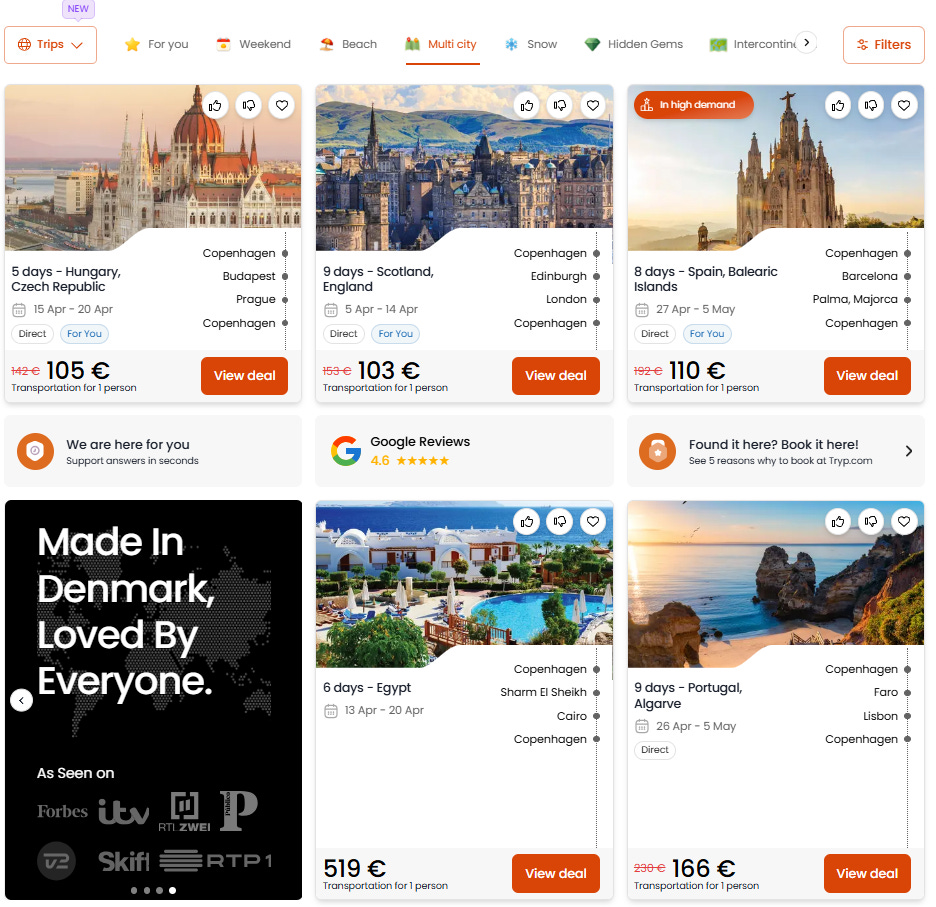
At Tryp.com, we now have behavioral data on over 6 million users. Half of our sales come from users who never searched for a specific destination. This confirms that the behavior we see on TikTok and YouTube—passive, algorithmic discovery—has finally arrived in travel.
The Chatbot Fallacy: Why You Can’t Build a House with Only a Wrench
This is where I strongly disagree with the current industry narrative. The travel world is obsessed with “Agentic AI” interfaces (LLMs) that force users to chat, type, and prompt.
But LLMs are a tool, like a wrench. They are incredible at what they do—completing phrases, understanding semantics, and sounding human. But just because you have a new wrench doesn’t mean everything suddenly needs to be built with hex bolts.
You cannot use a wrench to solve a math problem. And you cannot use an LLM to solve the “Traveling Salesman Problem” of real-time pricing.
LLMs are language calculators, not logic calculators. They cannot efficiently compute the price of 80 million ticket combinations in milliseconds. If you ask a chatbot to “find me a trip,” it is simply converting your words into a standard database query. It is just a “smarter” search bar.
The Data Paradox: Why “Less” Data is More Powerful
A skeptic might ask: “Expedia and Google have 20 years of booking history. How can Tryp win with just a few clicks?”
The answer lies in the difference between Search Data and Feed Data.
Legacy OTAs sit on mountains of data, but it is biased data. It is a record of intent, not preference. If a user searches for “London,” Expedia assumes they love London. But maybe they only searched for London because they assumed it was the only place they could afford. The data captures their constraints, not their true desires.
Our data is different. Because we show users a feed of everything—destinations they never thought of, at prices they didn’t know existed—their reaction (to swipe, to pause, to click) is unbiased. We don’t need 10 years of history to know what you want; we need 4 interactions with a truly open inventory to see who you are.
The Real Moat: Extreme Computation
Knowing what the user wants is useless if you can’t price it instantly.
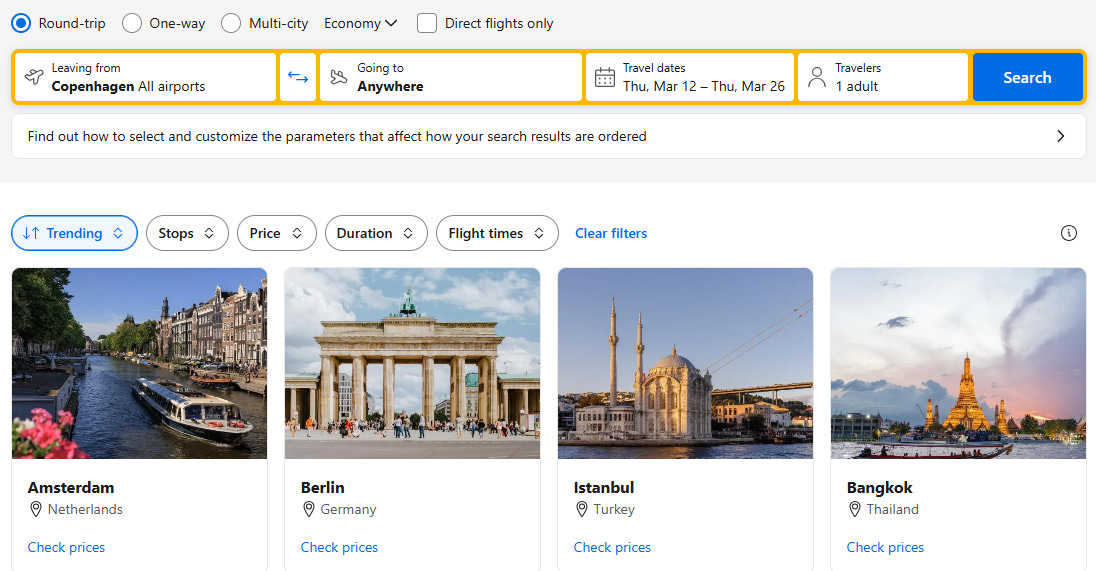
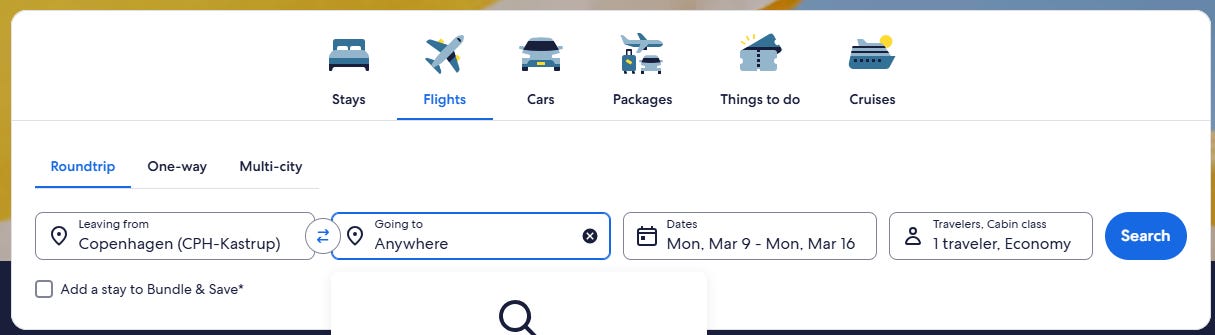
Legacy OTAs rely on caching systems that are excellent for “A-to-B” queries but fail at open-ended discovery. If you don’t ask a legacy OTA exactly where and when you want to go, it literally cannot answer you.
booking.com, no cache = no offers:
Expedia, doesn’t try:
We built a graph database that ingests pricing for 80 million tickets (rail, bus, air, and ferries) across 7,000+ locations. We can bundle a flight, a train, and a hotel into a single price for a trip to “Anywhere” in milliseconds.
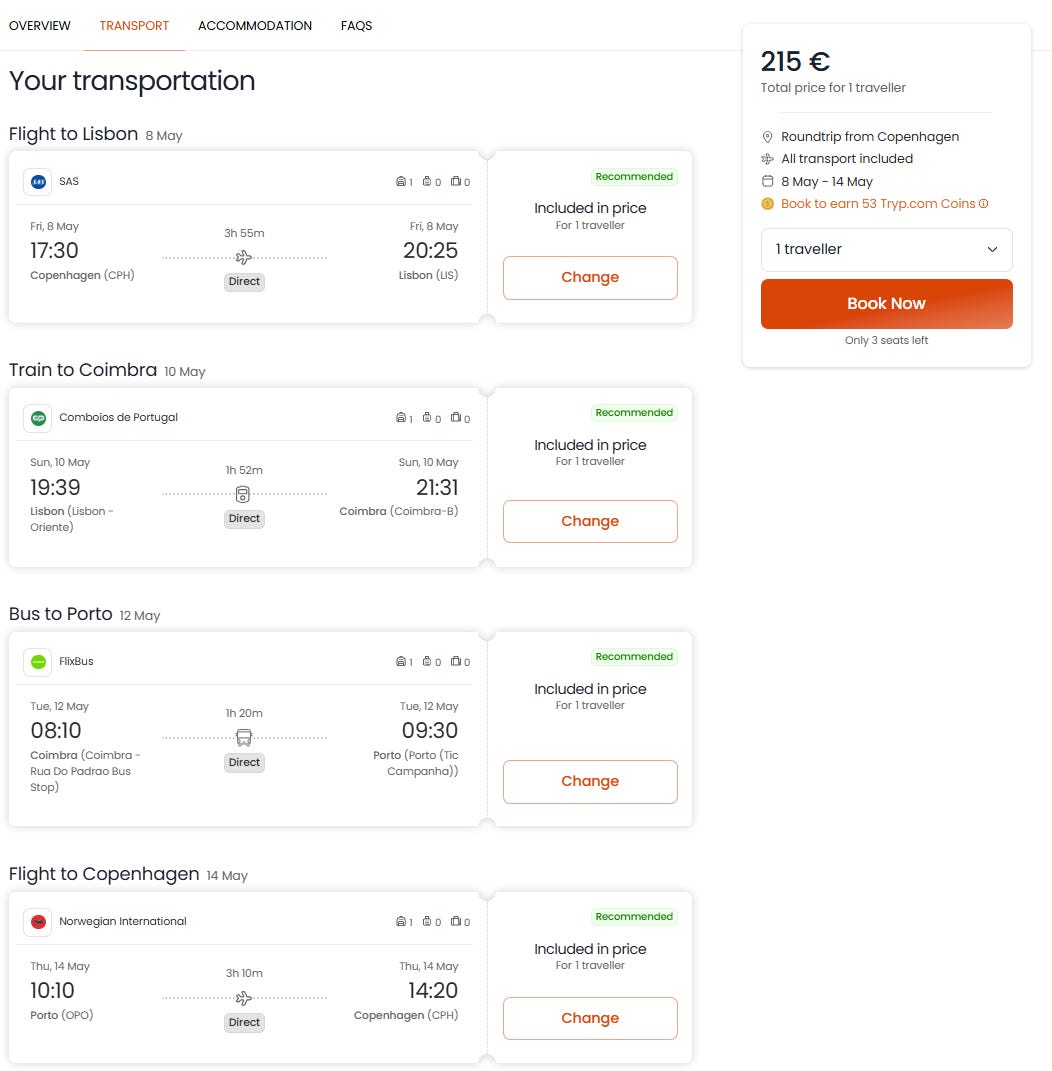
That is why “4 interactions” on our platform drives a 2x higher conversion rate. It’s not magic; it’s just the ability to compute a complex price the moment interest is detected.
The “Unsexy” Reality: Operations and Risk
Of course, building this is a nightmare.
We utilize Virtual Interlining (VI)—combining, say, a Ryanair flight with a FlixBus connection. This creates routes standard GDS systems never see, but it also creates “edge cases.” What happens if the bus is late? What happens if the flight is canceled?
Early on, we underestimated the operational weight of this. We thought code could solve everything. We were wrong.
We learned that you cannot automate empathy. We built “Sandra,” our AI agent, to handle 90% of queries, but we back her with a human Ops team that maintains a response time of under 5 minutes. We offer self-transfer guarantees to de-risk the bundle for the user. If a connection is missed, we step in. You cannot sell complex, multi-modal travel without owning the messiness that comes with it.
The Economics of Virality
Another hard lesson? You cannot beat the giants at Google Ads. Like many startups, we initially burned cash trying to acquire users via Performance Marketing. It was a race to the bottom where CAC eventually destroys earnings.
We pivoted to Decentralized Content. We recruited over 50 “Country Managers”—entrepreneurial students and scouts across Europe. They create localized, viral content (e.g., “How to visit 3 cities for €100”) that speaks the language of their peers.
The result is a Blended CAC of <€5 (vs industry standards often 10x higher). But more importantly, we are building a habit, not just a transaction engine.
A very high percentage of users return.
The median time between bookings is below 2 months
70% of revenue comes from mobile interfaces.
Entering the “Glass Box” Era
We are leaving the “Black Box” era of travel—models built on hidden pricing and dark patterns designed to confuse users.
We are building the “Glass Box.” We treat AI not as a trick to maximize conversion, but as a transparent agent for the user. If we do this right, we won’t just help people search for a trip. We’ll show them the one they didn’t know they wanted.
Travel has spent years treating a search like desire, when often it just reflects what felt possible. That shift from “tell us what you want” to “show us what fits you” is bigger than a new interface. And the point about owning the mess once discovery turns into a real trip matters just as much.
What a powerful approach. Did Tryp.com ever consider using this extreme computation for discovery also? In addition to decentralized content, it sounds promising to me to create landing pages based on interest on the platform, again using data to capture demand (e.g. 5 popular cities to visit for less than 100€ in summer 2026)